Skip to content Skip to footer

Green Spaces as an Integral Part of the Project

Integrated and sustainable design must also consider outdoor spaces from the outset. 

In contemporary architecture, green spaces are now seen as essential to a project’s success. Architects and landscape designers work in close partnership to deliver environments that are functional, comfortable and sustainable. Incorporating green space planning in the early stages of design is a proactive strategy. It supports efficient resource use, avoids costly adjustments later, and ensures that green elements are fully integrated rather than added as an afterthought. This approach not only enhances a structure’s visual character but also improves its performance, promotes user wellbeing, and contributes to long-term sustainability – resulting in environments that are more cohesive and harmonious.

Why Integrate Green Elements

A building - regardless of its function - demonstrates effective design when it stems from a holistic approach that considers all aspects of how people live and interact with space, with a focus on human wellbeing. Green roofs and walls offer practical and visually appealing solutions to modern design

challenges, from managing rainwater and enhancing biodiversity to improving energy performance through natural cooling. Some plant species can even support local food production – further enriching the function and value of the built environment.
Green Park
People and nature

Principles of Biophilic Design

Biophilic design is an innovative architectural approach grounded in a simple principle: reconnecting people with nature. This is achieved by weaving natural elements, forms, and processes into the built environment. Features such as indoor gardens, water features, and expansive glass panels

help foster a direct connection between humans and the natural world. Biophilic spaces also incorporate materials like wood and stone, along with earthy colours and textures that evoke the land and sky. These environments increasingly provide a variety of sensory stimuli, with shifts in light and temperature that mirror the rhythms of nature and the changing seasons.
Green Street

Regenerative Architecture

Recent neuroscientific research highlights the profound impact our surroundings have on mental and physical wellbeing. Even brief contact with nature offers significant benefits for psychological and physical recovery, as well as reducing stress levels.

Benefits of incorporating green spaces into architecture include lower cortisol and heart rates, improved concentration, creativity, and problem-solving skills, relief from anxiety and depression symptoms, as well as increased satisfaction and productivity.

The regenerative healing process supported by green spaces is based on Attention Restoration Theory. Green spaces allow us to mentally disconnect from everyday concerns, actively supporting our physical and mental health. Nature, by providing environments rich enough to allow full immersion, effortlessly captures our attention, enabling the brain to recover and rejuvenate.

What Does Science Say?

Numerous scientific studies have demonstrated the cognitive, psychological, physiological, productivity, and learning benefits that living close to nature brings. For example, a 50-minute walk in a natural setting improves concentration by 20%. Hospital patients with views of nature experience faster recovery times. Forest bathing offers long-term benefits, such as lowering cortisol levels, reducing systolic blood pressure, and boosting immune function. Students and employees perform better and feel healthier when classrooms and offices have natural light and views of greenery. Expanding urban green spaces decreases premature mortality and reduces air and noise pollution. Finally, children with greater access to green spaces are less likely to develop mental health disorders in adulthood.

Sustainability

Sustainable design of green spaces incorporates innovative technologies and responsible choices to conserve resources, minimise environmental impact, and create self-sufficient systems.

Water is recycled through systems that collect rainwater and wastewater, which – once treated – serve as a valuable resource for irrigation. To further reduce waste, closed-loop water systems are employed. The use of drip irrigation, permeable materials, and collection tanks helps to significantly limit water loss.

Finally, native plant species adapted to the local climate are recommended, as they require less irrigation and fertilisation, making maintenance more efficient and environmentally friendly.

Tavan Jargal Resort

The Project: Tavan Jargal Resort

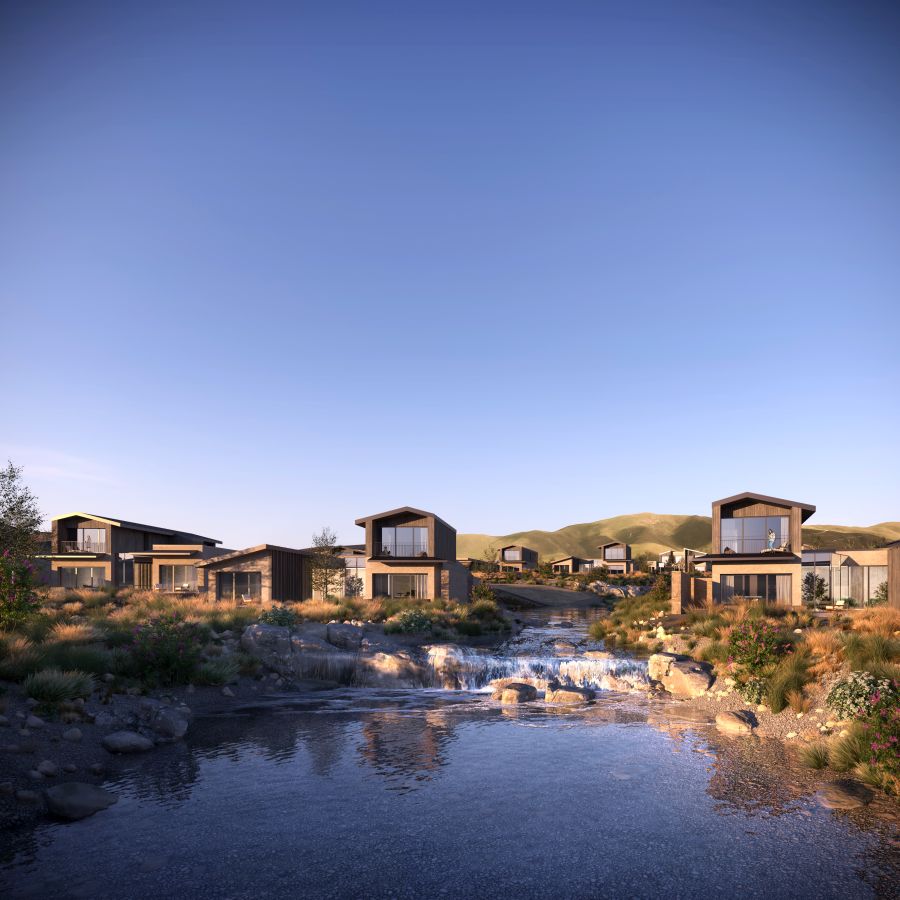
In the design of the Tavan Jargal Resort, biophilic principles played a central role, leading to the creation of four distinct eco-tones. Each was carefully developed to reflect natural systems and enhance ecological harmony:

Wood: Inspired by the northern slope of the local mountains and designed to mimic the forest’s natural development.

Upper tree layer: Provides shade for the mid-storey vegetation, helping to retain soil moisture.

Perennial plants: Form the lowest layer and are positioned along the perimeter, where sunlight is strongest.

Buffer Zone

This area is inspired by the forest’s edge, where woodland meets open grassland. Here, shrubs and perennial plants take centre stage. Low-growing shrubs, around 0.5 metres tall, are combined with perennials to create privacy between dwellings and define individual spaces, blending seamlessly into the surrounding landscape.

Lakeside Basin

The planting here is inspired by riparian corridors, with a mix of perennials, shrubs, and flower beds. The aim is not to create a visual barrier, but rather a spatial one, allowing guests to hear the sound of running water and enjoy uninterrupted views of the natural surroundings. This biotope promotes biodiversity and attracts a variety of local plant and animal species.

Meadow

This zone draws inspiration from the steppe and is designed to maintain visual and ecological continuity between the project and its natural setting.

Conclusions

As we have seen, designing green spaces requires strategies that not only support environmental sustainability but also offer long-term economic benefits – when approached with responsible planning choices. Integrated design enables the creation of spaces that not only respect nature but actively contribute to its regeneration and preservation.

Antonio Dal Cero

Antonio Dal Cero

After completing his Master’s degree in Architecture at IUAV University of Venice, Antonio began a rich and varied design career, with a passion for exploring the many facets of architectural design and site management. He has contributed to the development of buildings across various parts of the world, continually refining his skills in designing both public and private buildings. Today, he is enthusiastically involved in projects within the hospitality sector, where he meticulously oversees every construction detail.

 He favours solutions that speak the language of nature, using authentic and sustainable materials.

Leave a comment